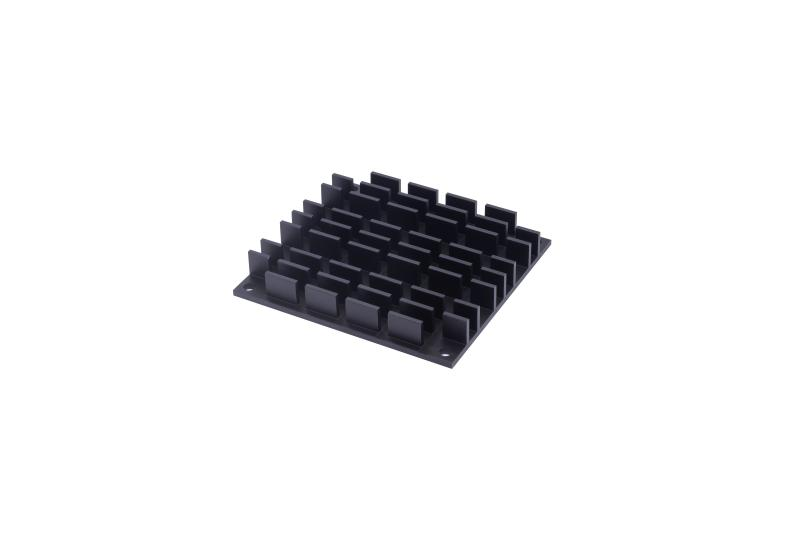
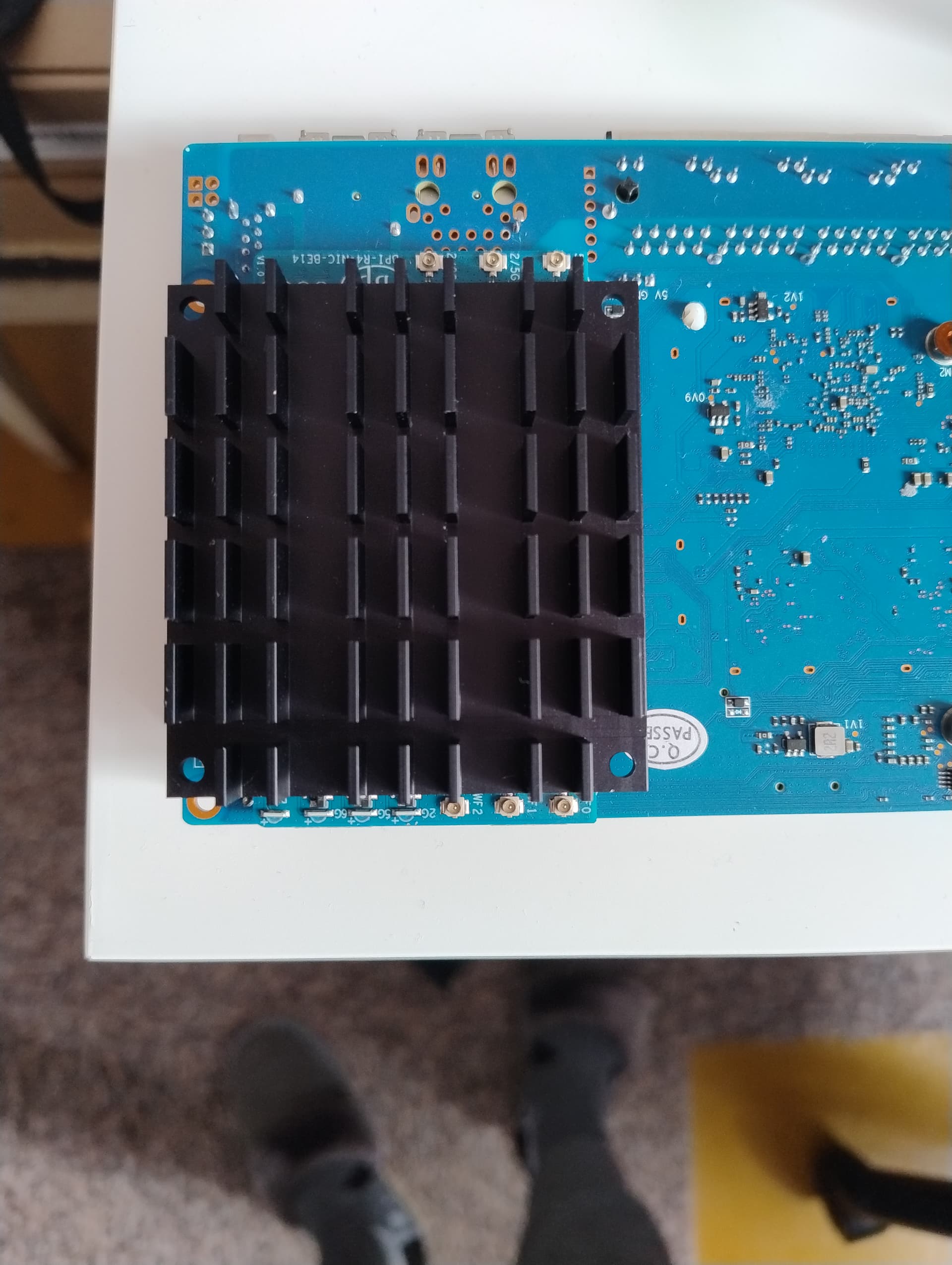
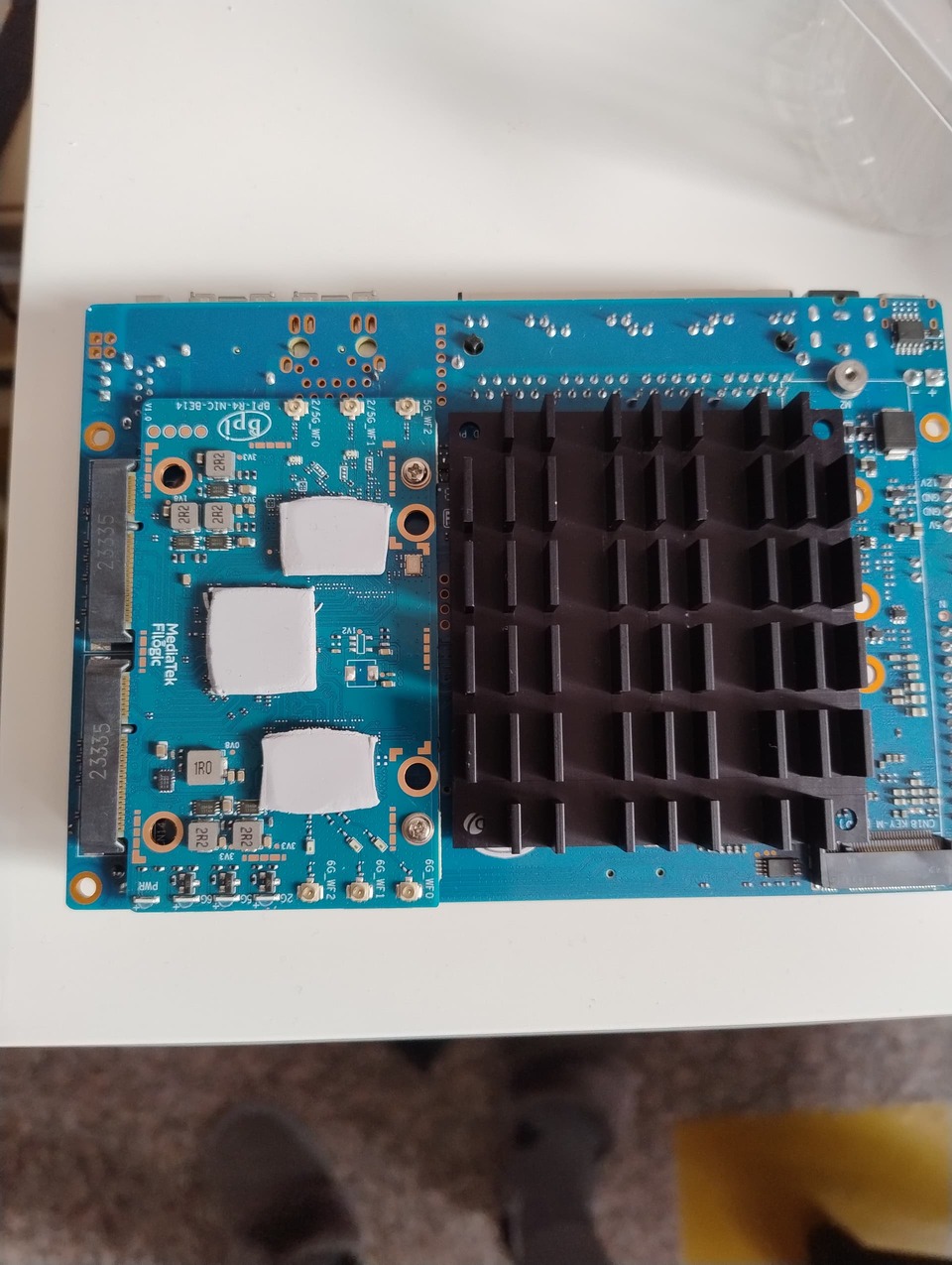
Heat sink with FAN
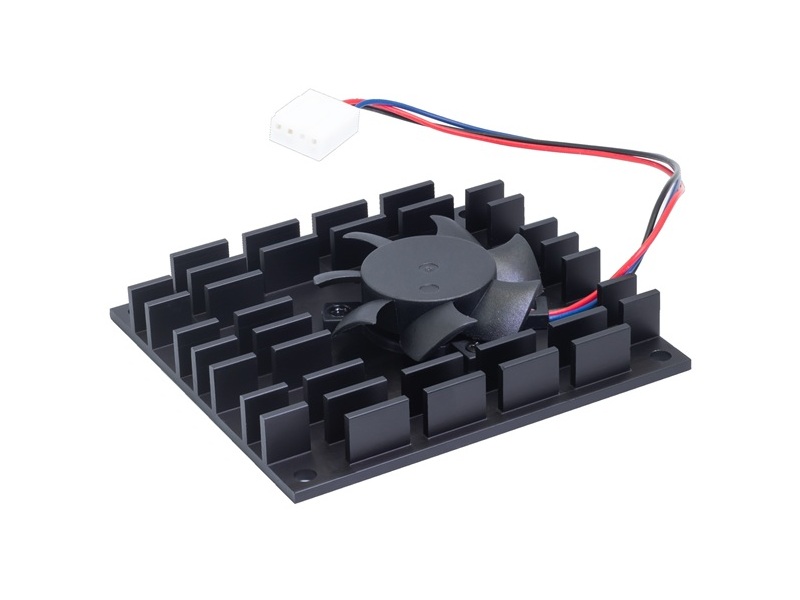
Heat sink without FAN
Why do you need a radiator for a non-working be14?
BE14 is operating normally and has been widely used by commercial customers. However, it lacks isolation for PA. We are currently designing a version of BE14 with isolation. BE19 is also undergoing the second round of hardware improvements and will be released soon.
Wow!

Thank you so much for this information!!!
I think it’s honorable that you’re making a revision. 
@sinovoip Will buyers of the old non-isolated BE14, have an option the exchange their old board for a new one? Or are we expected to just buy the new version without any compensation?
At least I hope there will be home made instruction how and where to solder something to modifi old board 
Will you be providing your customers who have paid you for the original faulty BE14 with replacement cards
Does this include the respective shielding (I guess this is what you mean with accronym PA)?
We sincerely hope that you will provide your first customers who have paid you for the original faulty BE14 with replacement cards. It would be proof that sinovoip is a respectable company
The card itself is not defective. It just lacks the shielding. Depending on how it is installed, you can retrofit it or not. Stop accusing the manufacturer of selling defective cards (apart from that one batch). That’s simply not true. But I agree that it would be great if the manufacturer would provide something for retrofitting.
This is hair-splitting, faulty also stands for misdesigned/unusable.
The card is useless for a normal usage scenario and even more when you have a multi-AP-setup. And even when applying all tricks to lower the SNR, it does not work well (clients keep being glued to BE14 instead of roaming to better SSIDs).
On the other hand everyone buying this card (this includes myself) knew, that early adopters sometimes get a non-usable product. That’s live. So I myself hope at least for some discount for us early testers, which would be really honorable.
This is hair-splitting, faulty also stands for misdesigned/unusable.
If you buy a new smartphone and the USB cable is missing, then the smartphone is broken too, right? Or if you buy a new car and the ashtrays are full, then the car is broken too, right???
Exactly, some people forget that it’s a developer board. And we’re also among the first to get these new things. It should have been clear to us that not everything would work right away. That’s just the risk. As for the problem with connecting clients to the BE14, I think it could be a software issue. I only have the BE14 as an access point myself, so I probably haven’t noticed it yet. I think we should wait and see what the manufacturer comes up with in the next few days/weeks.
No, your comparison is wrong. A USB-cable is something I could add on my own - the shielding cannot be added (or even if done so by someone experienced does not seem to have the expected effect - have a look into @Betonmischer’s project). If I adopt your comparison it would be some resistor for the USB-interface missing which does restrict data transfer to very low speeds only or something like that.
its a dev board, yeah, but your comparisons are far away from a fair comparison. its like comparing apples with bananas. when the ash tray is full, i empty it. thats a common task. adding some special shielding to a highly sensitive pcb is something far off a regular scenario. whats next, replacing some SMD chips because “its just missing this little resistor”? 
Its not like “we can buy the shielding and plug it into the pcb and it will auto-fit without any skills”, like your usb-cable comparison…
Hehe, the resistor thing already happened with first version of BPI-R4 board (something regarding NVME if I remember correctly).
I know the argument “it’s a developer board” comes up frequently, but what does that actually mean?
A developer board is a relatively raw platform intended for building your own projects — similar to the former Arduino boards. The hardware itself is already largely stable and free of major bugs when it reaches the market.
A developer board is a work-in-progress product that developers effectively buy into. As a developer, you help the company get the board across the finish line by identifying and debugging issues — in other words, you’re receiving something closer to a beta board, not yet ready for mass production.
I purchased it under the assumption that it was category #1, but it increasingly feels like what’s being sold is actually category #2.
Be14 = there was not only one bad batch with missing epprom data. I buy one in November and it’s faulty to. So I’m limited to frimware with patches that will never go to mainstream openwrt!
The issue is not just shielding, we tried shielding and it done nothing, the issue is in the isolation of the PA as stated by sinovoip
imho
1- If the answer to fixing a problem is replacing a board → then this would imply the board is faulty beyond repair.
2- If the answer to fixing a problem is doing a hardware modification to the board → this would imply the board is faulty, but within the realm of end users fixing it.
3- If the answer to fixing a problem is doing a firmware/software upgrade → this would imply the board could be faulty and software should be deployed to fix it (e.g., an acceptable workaround).
Given the above three;
If #1 → It would be respectable to be able to replace the board under warranty, exchange, or discount. I think we all feel that this will not happen.
If #2 → It would be respectable to replace the board under warranty, get documentation on how to fix it, or send it in to a repair service to fix it. I think we all feel this will not happen.
If #3 → We’ve seen evidence of mtk making software changes almost daily (mtk-openwrt-feeds). I would like to think if the SNR issue was a software issue, this would have been solved a very long time ago. Same with the bad eeprom issue.
My take? Observe the behavior of the manufacturer. If they do not ‘make it right’ by your standards, do not buy from them again. This is an educational moment.
I think exchange/discount/etc in exchange for our feedback, helping diagnose, troubleshoot, provide end user to end user guidance, etc, is an acceptable tradeoff for being the early adopters.