Banana Pi BPI-R4 Mini wifi7 Router board design with MT7987

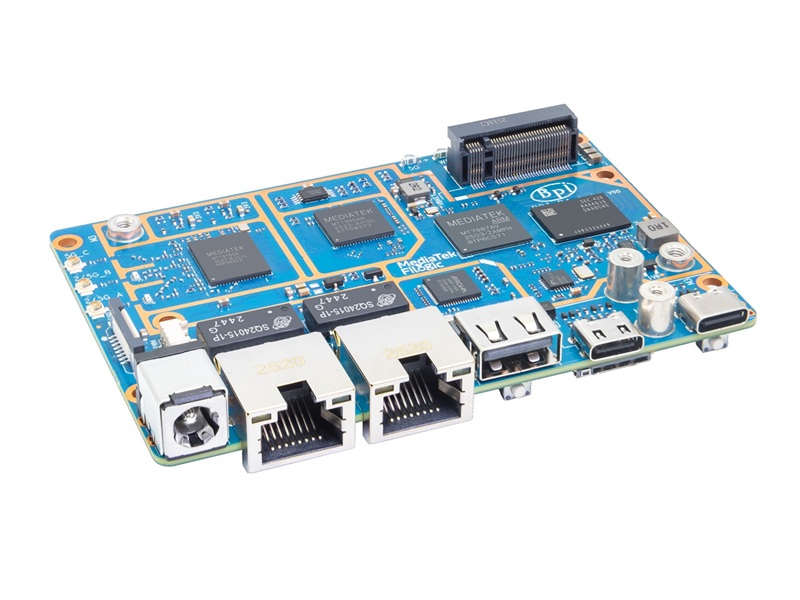
Banana Pi BPI-R4 Mini Wifi7 smart router board design with MediaTek MT7987A Quad-core Arm Cortex-A53,it support 2GB DDR4 and 8G eMMC Flash on board. 2 x 2.5G RJ45, Wifi7 onboard,Mini Size.

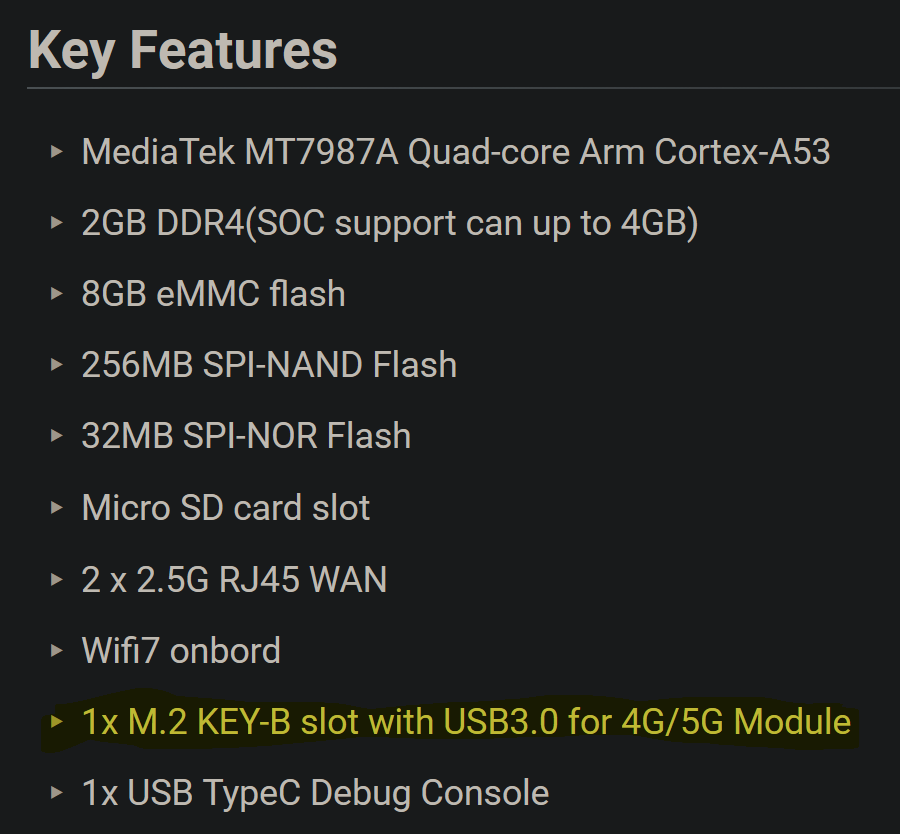
Key Features

  • MediaTek MT7987A Quad-core Arm Cortex-A53
  • 2GB DDR4(SOC support can up to 4GB)
  • 8GB eMMC flash
  • 256MB SPI-NAND Flash
  • 32MB SPI-NOR Flash
  • Micro SD card slot
  • 2 x 2.5G RJ45 WAN
  • Wifi7 onbord
  • 1x M.2 KEY-B slot with USB3.0 for 4G/5G Module
  • 1x USB TypeC Debug Console

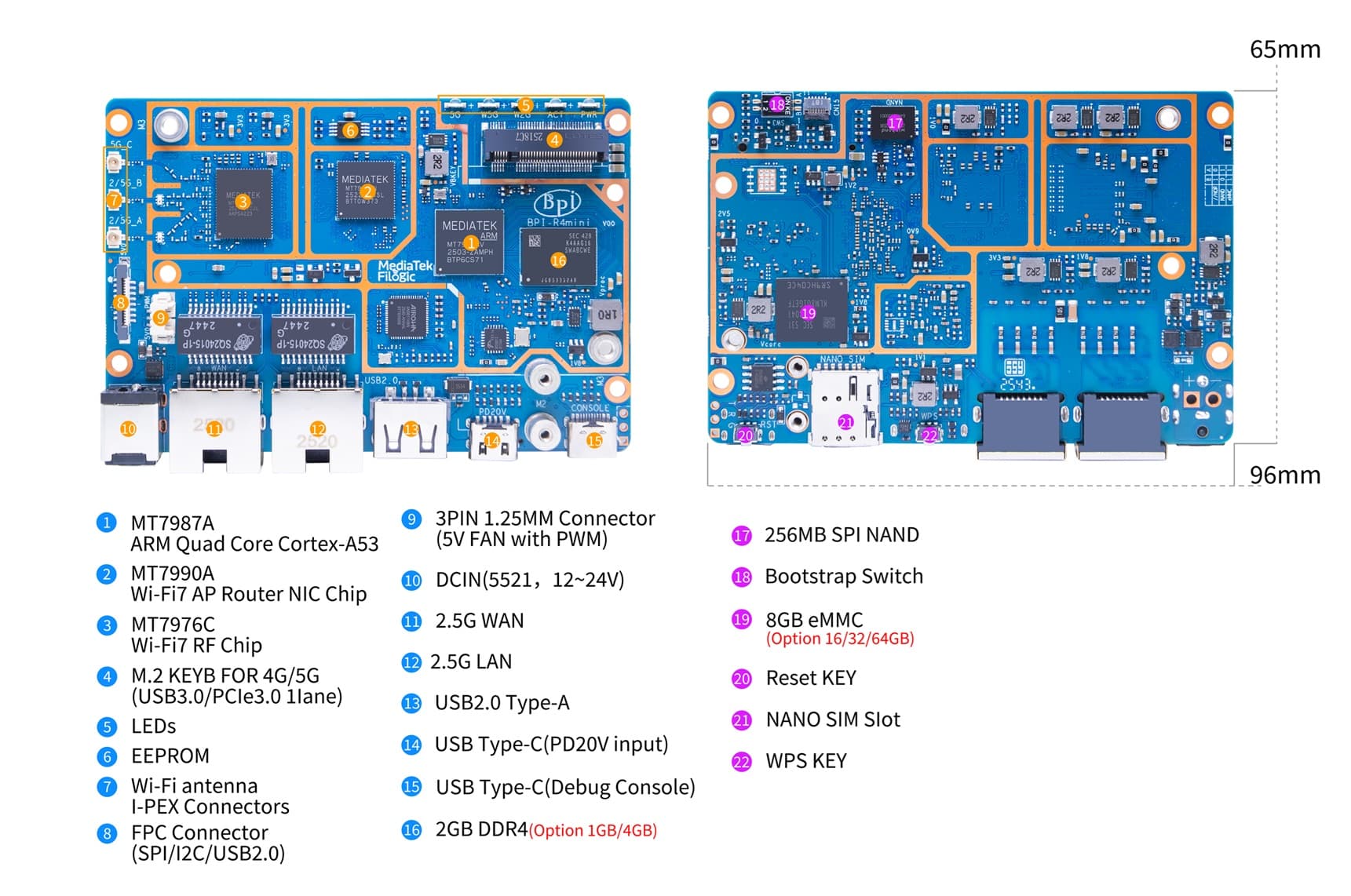
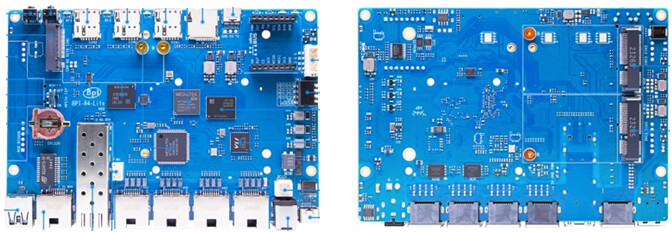
Hardware interface:

more ,please see online wiki page:

https://docs.banana-pi.org/e/en/BPI-R4_Mini/BananaPi_BPI-R4_Mini

2 Likes

It looks like there are two supports for a propper heatsink. Will there be one? And what about a metal case?

Really nice to see a smaller R4 coming together :+1:

Just wondering where the R4 Mini is at right now — is this still early design work, or are samples already planned?

Any rough timeline in mind for pre-orders or availability?

And is the hardware mostly fixed at this point, or still evolving?

Thanks for sharing the details!

sample ready , we do all hardware function test now ,Once we complete all the hardware tests, we will start mass production as soon as possible. It may be sold publicly in assembled kits.

That’s great to hear, thanks for the update! :+1:

It sounds like things are moving along well now that samples are ready and full hardware testing is underway.

Based on what you shared, would it be reasonable to expect that people might realistically be able to get and start using the R4 Mini around March or April 2026, assuming the testing goes smoothly?

Totally understand that timelines can still change — just trying to get a rough sense of expectations.

Thanks again for sharing the progress!

Yes, if everything goes as planned, there is no need to update the hardware. The batch will be produced in the first quarter.

In the main specs it says “M.2 KEY-B slot with USB3.0 for 4G/5G Module” but then in the diagram below it says “M.2 KEYB FOR 4G/5G (USB3.0/PCIe3.0 1lane)”. Which is it? Does it have the PCIe3.0 lane like the BPI R4 does? Or is it like the BPI R3 Mini that doesn’t have the PCIe? (I’m hoping it has the PCIe) Thanks!

I think it was written too quickly.

The documentation is more consistent about it:

The top part of that new link still just says “1x M.2 KEY-B slot with USB3.0 for 4G/5G Module” with no mention of PCIe in the Key Features, but then down below the Hardware Spec says “M.2 KEYB PCIE support 4G/5G (USB3.0/PCIe3.0 1 lane)” so I’m hoping that’s right.

Found it:

I still think it includes PCIe — it’s just not present in this part / on this section.

But you’re right!

→ This should be confirmed.

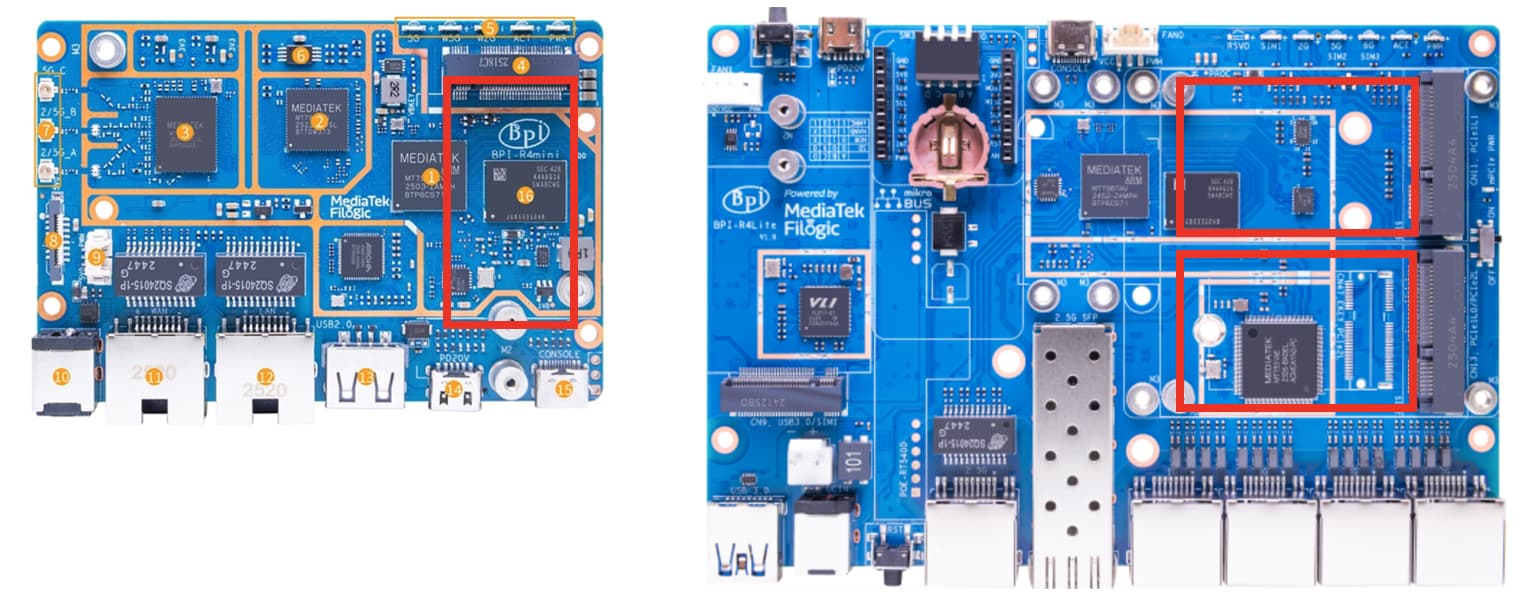
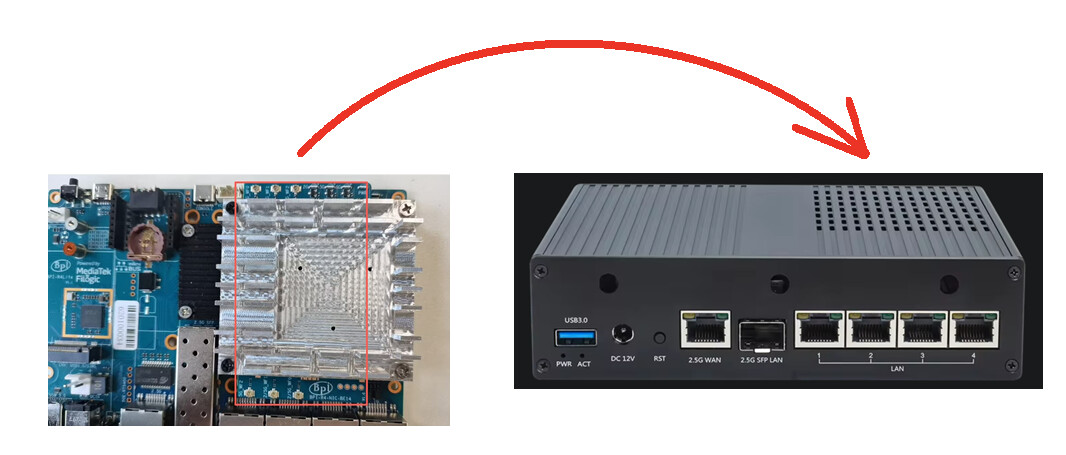
Can you say something about your decision to place the M.2 / mini PCIe header in a position where the module overlaps with other chips?

  • My assumption is that the R4 and the BE14 caused this design change:
  • The R4 was getting a new case, and the BE14 has a new cooling solution.
  • I also noticed that there is a concept for the R4 Lite to move the heat out of the case:

  • I hope this decision is not driven by the necessary of placing the BE14 between two metal plates (for better shielding).

I found that your PCB shielding (from a layman’s point of view) has improved a lot:

  • You even shield the MT7990A against the MT7976C on the R4 Mini.
  • However, using shielding cans with so little clearance between the M.2 / mini PCIe modules is challenging (and may even be impossible).

  • This is just my opinion, but at first glance I would prefer the old R4 Lite design:

grafik

  • And for the R4 Mini, I would also prefer the M.2 socket on the backside.

Best regards!

Hi,

The R4mini places the BKEY connector on this side primarily to accommodate the WiFi antenna and 5G module antenna assembly.

To reduce heat, we used a 2.5G GEN2 PHY (AN8811) with significantly lower power consumption, and the NIC also uses the relatively low-power MT7990.

In addition to the top shielding and heatsink, a large heatsink will also be added to the bottom of the PCB, which should provide good heat dissipation control.

Currently, driver debugging is underway, and the heatsink is already being prototyped. We expect to have heat dissipation tests soon.

Stay tuned!

1 Like

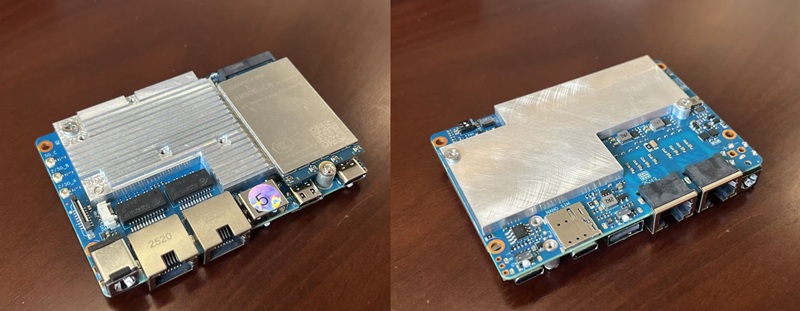
BPI-R4 Mini heatsink sample:

1 Like

for me this looks almost perfect. it seems like the idea of this concept is fanless.

just the critical situation for the ram. I really wonder what that product will cost finally.

i would miss the key-m slot…also noticed this on R4Lite which uses same SoC. Imho more users want to use nvme than a modem. Basicly both could be supported with key-e slot, but afair modems need slight higer voltage which may cause heat or damage to some nvme drives. Also a router-board with only 2 RJ45 ports (same for R3Mini) and also without wifi is a strange router :wink:

BPI-R4 Mini Wifi7 onboard, BPI-R4 Lite with more RJ45 port and without wifi7 on board,

Historic breakthrough for Banana Pi! :slightly_smiling_face:


Heatsink:

  • individual 3D heatsink
  • for heat dissipation
  • seamless electromagnetic shielding (?)
  • on both sides!

:partying_face:

I am somewhat surprised by this development.

I would appreciate seeing this implemented for all of your router boards (R3, R4, R…).


One remark regarding your heatsink pictures (AliExpress as well):

  • The top side is interesting; however, the underside is also interesting :see_no_evil:
  • The R4 Lite has three pictures showing the top side, but no picture showing the underside.

I was also tinkering with the R2 Mini and the R4 Mini and tried to answer the question:

→ What is it, and what can I do with it?

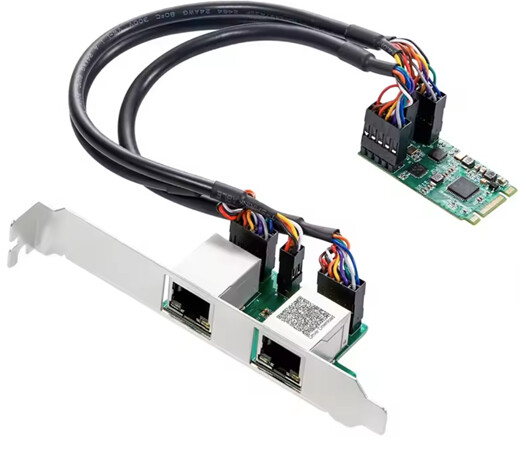
→ For the R4 Mini, I was considering using an additional card to extend RJ45:

grafik

But after a few days of thinking:

→ The main purpose is a travel router:

Compared to this, it has an additional 5G modem and a USB-C debug port.

This is where my tinkering ended … :see_no_evil:

I would also like to share my opinion regarding the selection of ports on the R4 Mini.

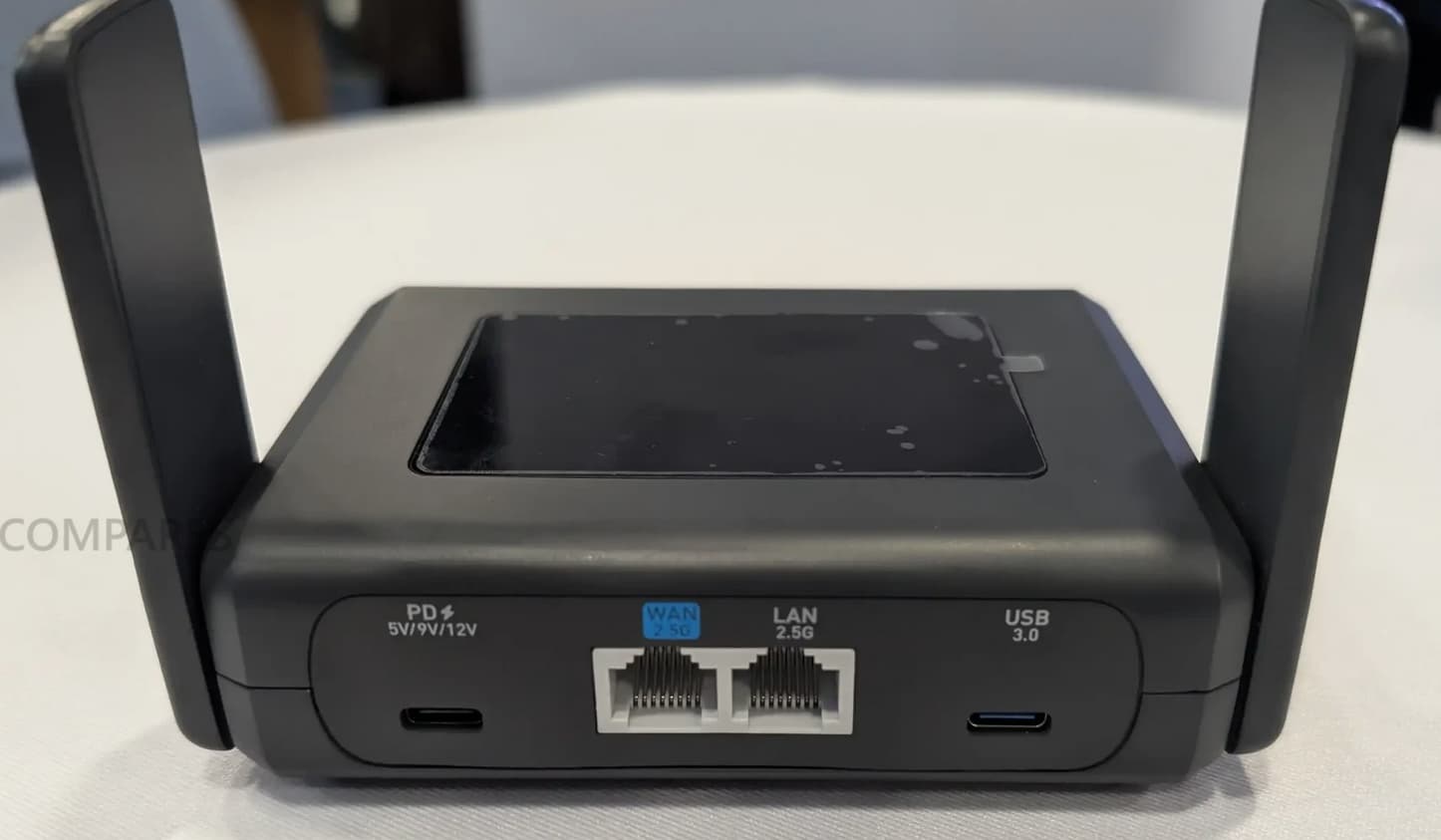
If space is limited, I would opt for 3 Ă— USB-C:

  • power
  • debug
  • data

Therefore, my suggestion would be to omit the DC port and the USB-A port and use the space for something else :slightly_smiling_face:.

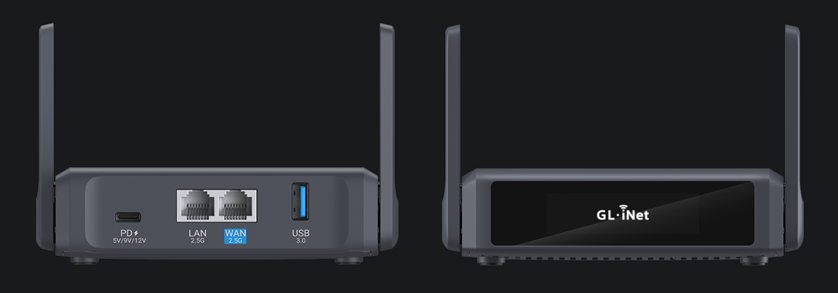
I understand that the DC port is intended for industrial customers, but regarding the change from USB-A to USB-C, I have a reference (GL.iNet Slate 7 Pro):

… and this might also be a good suggestion for the future R5 and R5 Pro (Filogic 8000).

As usual, this is just something from my wishlist!

Sorry, missed this somehow. So only the key-m is missing to have comparable state with R3mini. As it is designed for travel router like @Lorem_amicus wrote i guess the 2 ports are enough (as rj45 will require switch chip and the ports itself need much space). And R3mini also uses usb-c for power so i ack this point from michael.